
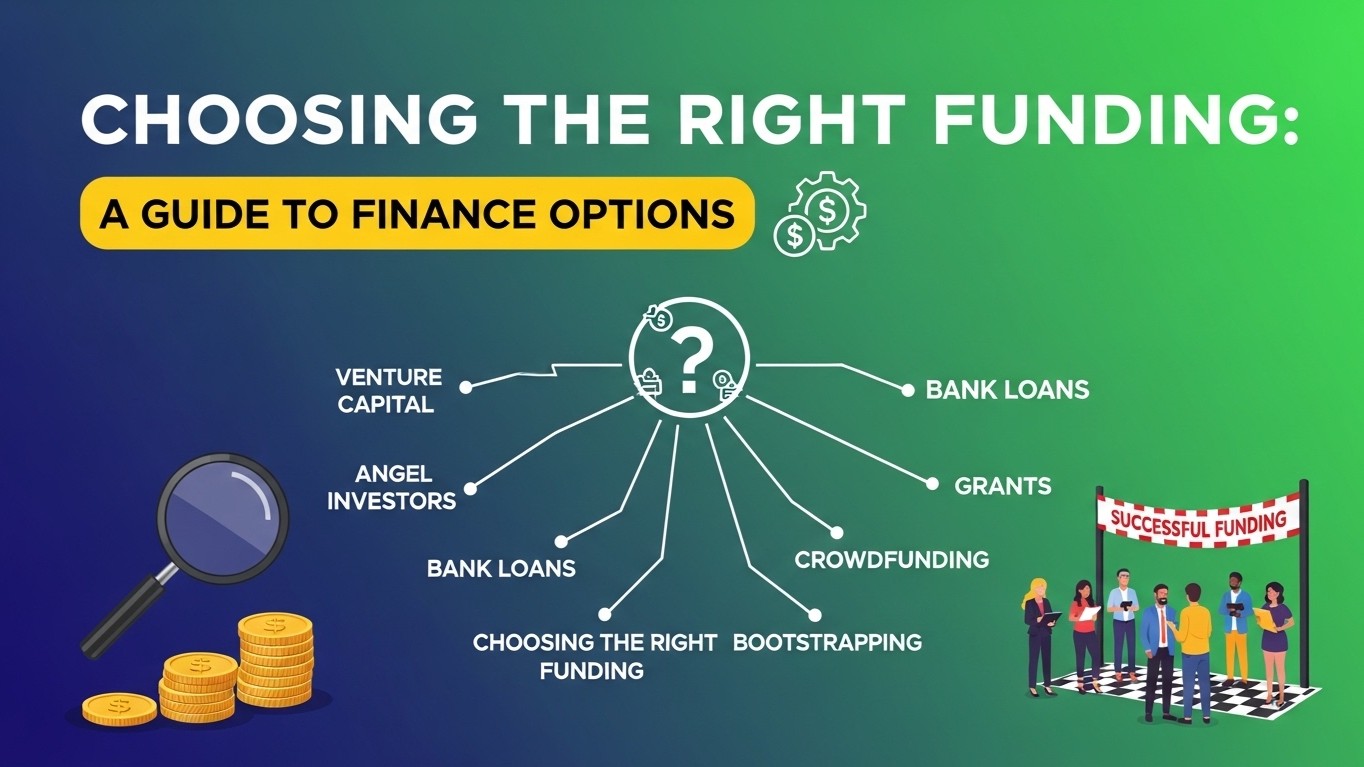

Choose funding around the use of money
A business can need capital for machinery, stock, customer credit, product development or an unexpected cash shortage. These needs have different durations and risks. Begin by stating what the money will pay for, when it will be spent and how the business expects to recover it. Only then compare finance options.
For an Indian MSME, the practical choice is often a combination of promoter funds, term debt and working capital facilities. A startup with uncertain revenue may face a different decision involving equity. No funding source removes business risk. The aim is to choose obligations and ownership terms that the business can sustain under realistic conditions.
Map the requirement before contacting a financier
Separate capital expenditure from operating funding. A machine may generate benefits over several years, while stock may turn into cash over a few months. Customer receivables require another estimate based on payment terms and actual collection behaviour. Include installation, commissioning and the period before normal sales begin.
Build a monthly cash forecast with opening cash, collections, purchases, wages, overheads, taxes and loan payments. The largest cumulative shortfall helps identify the funding need. Do not rely solely on annual profit because it can conceal months when payments exceed collections. Include a reserve based on identifiable risks rather than an arbitrary balancing amount.
Own funds and retained earnings
Bootstrapping uses the promoter's capital and resources generated by the business. It can preserve ownership and reduce contractual debt payments. However, it concentrates financial exposure on the owner and may limit the pace of growth. Using savings also has an opportunity cost and can weaken the household's emergency reserve.
Document every contribution and distinguish it from customer receipts. If money comes from family members, establish whether it is a gift, loan or ownership investment and obtain appropriate advice on documentation and tax treatment. Informal arrangements can become disputed later, particularly when the business needs further borrowing or a new investor.
Term loans for longer-lived expenditure
A term loan can spread repayment of an asset or project over an agreed schedule. The borrower retains ownership of the business but takes on principal, interest and contractual conditions. Security, guarantees, rate structure, fees and permitted use vary by facility and lender. Compare written terms rather than relying on an advertised starting rate.
Match repayment to commissioning and cash generation. A machine purchased today may not generate receipts immediately. Review processing fees, insurance requirements, prepayment terms and the effect of rate changes. An instalment that appears affordable at full utilisation may become difficult during a slower sales ramp.
Working capital facilities for the operating cycle
Cash credit, overdraft and other working capital arrangements can support inventory and receivables, subject to the facility's terms. The sanctioned amount is not necessarily the amount available to draw at every point. Review drawing-power calculations, eligible assets, reporting requirements, margins and review conditions where applicable.
A recurring operating loss needs a business response; revolving borrowing cannot indefinitely substitute for viable pricing or cost control. Likewise, long-lived assets funded out of a short-term facility can leave too little capacity for stock and customer credit. Explain how borrowing will reduce when the operating cycle releases cash.
Equity for a different risk and ownership arrangement
Equity brings capital in exchange for an ownership interest. It generally does not require the same scheduled principal repayments as a conventional loan, but it changes ownership economics and may introduce governance rights, information requirements and exit expectations. The legal terms matter as much as the headline valuation.
External equity is not automatically suitable for every small business. Investors may seek growth and eventual liquidity that a stable local enterprise does not plan to deliver. Model dilution across possible future rounds and discuss decision rights, founder responsibilities and the consequences of underperformance before agreeing to terms.
Trade credit, receivables finance and leasing
Supplier credit can help align purchases with collections, although longer payment terms may involve higher prices or the loss of early-payment discounts. Receivables finance can accelerate cash from qualifying invoices. Review recourse, customer acceptance, eligibility, charges and concentration limits instead of assuming every invoice can be funded.
Leasing or rental can reduce initial asset expenditure, but compare the complete payment commitment, maintenance responsibilities and end-of-term position. Revenue-linked arrangements also require careful cash-flow modelling. A repayment expressed as a percentage of revenue can still be expensive or restrictive when margins are thin.
Grants and subsidies require separate checks
Scheme support can improve a project funding plan when the business and expenditure qualify. Conditions may concern activity, location, applicant category, employment, purchases or ongoing compliance. Support can be reimbursed later, adjusted against borrowing or released only after specified milestones. It should not automatically be treated as cash available at project commencement.
Check whether a condition can trigger recovery or loss of assistance. Do not fund a compulsory upfront payment with an unapproved grant assumption. Keep a viable base-case plan and document how the business would operate if support is delayed or reduced. Scheme selection is separate from the lender's credit decision.
Compare options on the same basis
| Option | Main commitment | Question to ask |
|---|---|---|
| Own funds | Promoter capital at risk | What reserve remains outside the business? |
| Term debt | Scheduled debt service and covenants | Can cash generation support the payment dates? |
| Working capital | Facility conditions and operating-cycle discipline | What assets and reports support availability? |
| Equity | Ownership dilution and negotiated rights | Are investor expectations compatible with the plan? |
| Scheme support | Eligibility and compliance conditions | When can funds actually be used? |
Prepare evidence for the proposal
For a project loan, a Detailed Project Report should connect business assumptions, project cost, means of finance, projected statements and repayment analysis. Finxora's project report software supports these schedules and DSCR analysis. Review the figures against quotations and financing terms rather than relying on a report's appearance.
For working capital proposals, the lender may ask for historical accounts, provisional results and CMA data. Finxora's CMA report software prepares operating statements, balance-sheet analysis, working capital assessments and ratios. Confirm which annexures the bank requires and keep supporting records for every material input.
Make the decision after a downside test
Test delayed collections, lower sales, cost increases and a later project start. Measure the additional cash needed and identify a credible source. Compare each option's effective cost, repayment burden, control implications, security exposure and documentation obligations. A cheaper interest rate does not compensate for a structure that cannot fund the intended use.
Record the chosen funding mix and the assumptions behind it. Keep project cost equal to the identified means of finance, without counting the same source twice. Review the plan when terms change and before signing. A sound funding decision leaves the business with a clear purpose for the money and a realistic path to meeting its commitments.