

Why business loan timelines vary
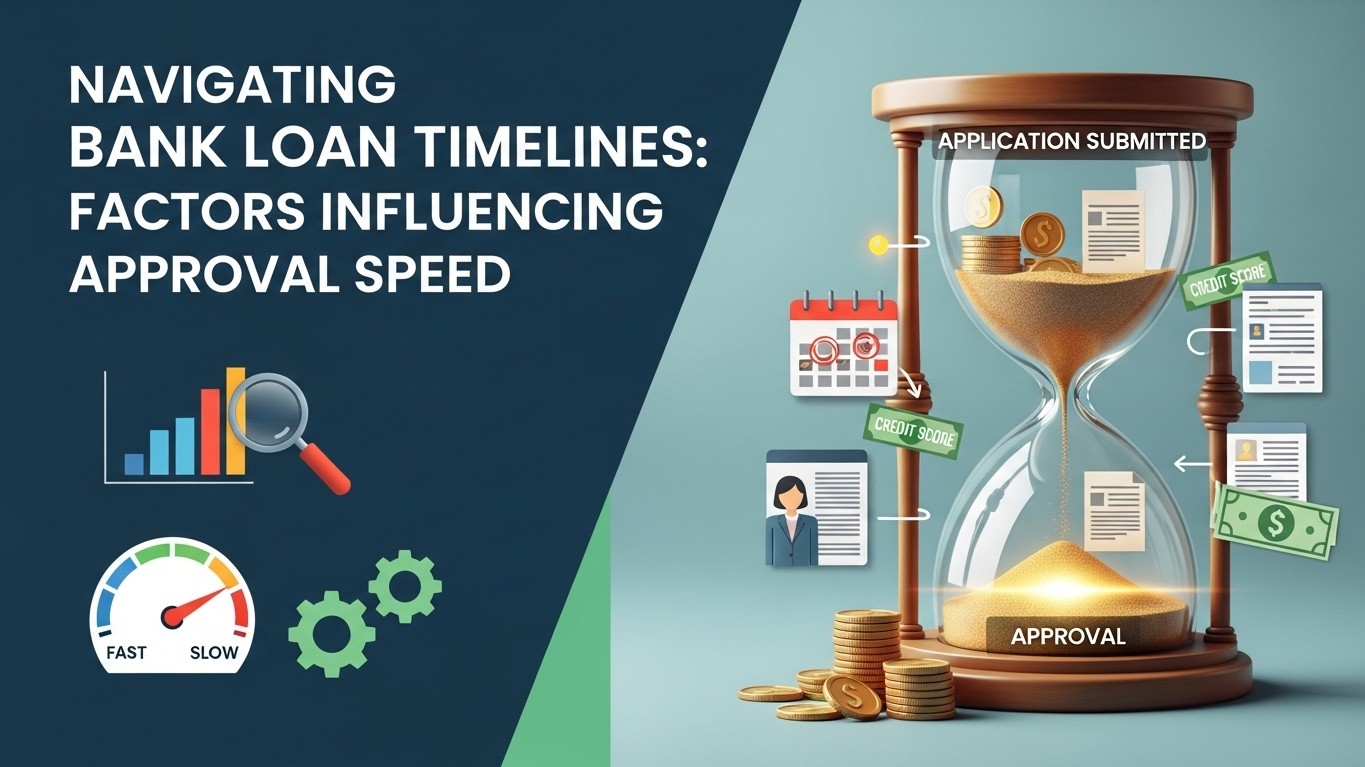
A business loan moves through several decisions before money reaches the borrower. The bank must understand the purpose, assess repayment capacity, verify documents and complete the conditions attached to its sanction. A simple renewal and a new manufacturing project therefore have different processing paths. Treat an estimated date as a planning assumption until the bank confirms the relevant stage and outstanding requirements.
For an Indian MSME, the practical question is not only when the loan will be approved. It is when the funds will be available for a machinery payment, purchase order or seasonal stock build. Sanction and disbursement are separate milestones. A sanction letter may still require promoter contribution, security documentation, insurance or supplier evidence before a release can occur.
Start with the correct facility
Explain whether you need a term loan for fixed assets, working capital for the operating cycle, or both. Give the bank the amount, purpose and required date for each component. An application presented as a general cash requirement is harder to appraise than one linked to quotations, projected collections and a funding schedule.
Ask the branch for its current checklist and any applicable service timeline. The documents and process depend on the facility, borrower constitution, security and lending programme. Do not add together generic internet estimates for each stage: several checks may run in parallel, while a single unresolved issue may hold up the entire file.
The stages between application and funds
1. Receipt and completeness review
The bank checks the application, identity and business documents, financial statements and supporting schedules. Existing units may be asked for audited accounts, current provisional figures, account statements, tax records and details of existing borrowings. A new unit must explain the promoter's experience, project cost, contribution and expected operations. Obtain an acknowledgement and retain the exact version submitted.
2. Financial and credit appraisal
The credit team examines earnings, leverage, cash generation and repayment commitments. It may compare turnover in the accounts with other records and investigate differences. A business that reports profit but collects slowly may need a more detailed cash-flow explanation. Credit history matters, but a strong score does not replace project viability or complete documentation.
3. Security and independent checks
Where security is required, legal scrutiny and valuation can create separate workstreams. Property ownership, access to original documents and discrepancies in descriptions may need clarification. Site visits and technical appraisal may also be relevant. Ask which checks are pending and who must provide the next document rather than assuming that the application is waiting with one officer.
4. Sanction by the competent authority
The proposal moves to the authority empowered to decide it. The outcome may include conditions, a different amount or a revised repayment structure. Read the written sanction carefully, including interest terms, margin, security, covenants, validity and disbursement conditions. An informal indication from a relationship manager is not the same as a completed sanction.
5. Documentation and disbursement
Loan agreements and security formalities follow the sanction requirements. The bank may verify promoter contribution and release funds against supplier invoices or progress evidence. A project with several installation stages may receive several releases. Build the purchasing plan around these conditions, and confirm whether payment will go to the borrower or directly to a supplier.
Common sources of avoidable delay
- Different turnover, borrowing or capital figures across application documents.
- Missing schedules behind large balances or unexplained movements in provisional accounts.
- Supplier quotations that no longer match the proposed equipment or project cost.
- Unclear ownership documents or incomplete information about existing security interests.
- Promoter contribution that is promised without evidence of availability.
- Repeated revisions without a dated summary identifying the latest version.
Prepare a reconciliation note before submission. If the accounts, tax records and bank credits differ for legitimate reasons, explain the bridge with dates and supporting documents. Do not alter accurate source records to make every headline total identical. The aim is an understandable financial trail that allows the lender to complete its assessment.
Make the financial pack easier to examine
A Detailed Project Report should connect the business proposal with project cost, means of finance, projected statements and debt service. Finxora's project report software prepares these linked sections, including an EMI repayment schedule, DSCR and break-even analysis. Review the inputs and narrative against the actual proposal before sharing the output.
For working capital, the bank may ask for Credit Monitoring Arrangement data. Historical results, provisional figures and projections should show how inventory, receivables and supplier credit create the funding requirement. Finxora's CMA report software includes operating statements, ratio analysis and working capital computations. A prepared report supports appraisal; it does not determine the bank's decision or processing speed.
Use a simple application tracker
| Item | Record | Purpose |
|---|---|---|
| Application | Reference, date and contact | Identify the correct file |
| Documents | Submitted version and acknowledgement | Prevent repeated requests |
| Queries | Question, owner and response date | Keep responsibilities clear |
| Sanction conditions | Evidence and completion status | Plan the release of funds |
Send consolidated responses wherever practical. Number the bank's questions and attach evidence against each one. If an item is unavailable, state why and ask what alternative the lender can accept. A short, complete reply is easier to process than several messages with overlapping attachments and changing numbers.
Plan for uncertainty without inventing a deadline
Separate the supplier's preferred date from the latest date the business can tolerate. Identify which commitments are refundable, which require an advance and which depend on bank release. Discuss these constraints before signing purchase contracts. Avoid assuming that a verbal approval will fund a non-refundable payment.
For renewals, begin preparation before the current facility review date and check whether updated statements or stock information are due. Keep servicing existing obligations while the application is assessed. If a material change occurs, such as a lost order, cost increase or delayed contribution, notify the bank and update the projections rather than allowing an outdated proposal to proceed.
Use sample reports to review presentation, then obtain the branch's own checklist. Consistent records, timely replies and realistic projections reduce preventable back-and-forth. The actual timeline remains dependent on the lender's appraisal, required checks and completion of the conditions for the specific facility.